
 by
by The common thread linking the camps is their collective existence as the massive, interconnected state apparatus of violence, terror, and destruction.
The Nazi Concentration Camp System — The National WWII Museum
The first Nazi camps were created to hold those deemed as “enemies” or “subversives.” Such camps differed from normal prisons because of the harsh conditions and operated “without regard to legal norms of arrest and imprisonment that are acceptable in a constitutional democracy.”
In addition to the lack of due process or semblance of a trial that preceded incarceration, all safeguards, checks, and balances regarding “civil and humane” prisoner treatment vanished inside the gates. Essentially, the concentration camp became a space disconnected from the outside world, within which “justice” was meted out at the whims of the commandant, or much more often, individual camp guards.
The Rise of the Modern American Concentration Camp — Immigration and Human Rights Law Review
For the first time in U.S. history, immigrants with no criminal record now constitute the largest population in U.S. Immigration and Customs Enforcement (“ICE”) detention. As of February 7, 2026, nearly seventy-five percent of all immigrants detained—approximately 50,000 individuals—have never been convicted of a criminal offense.
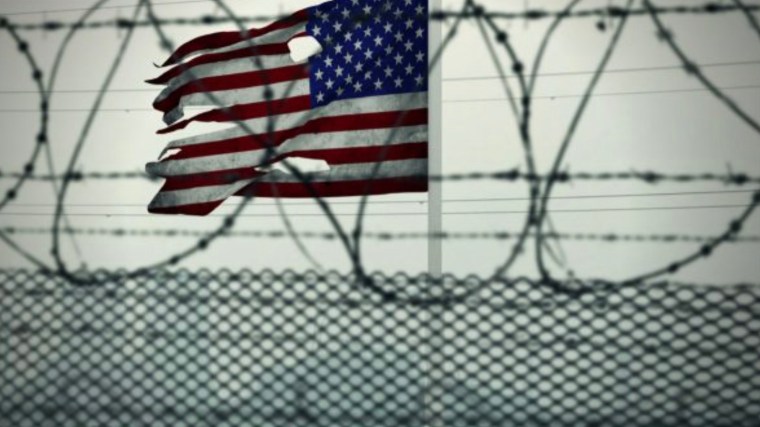
The systemic expansion of facilities that disproportionately target minority groups based on status mirrors a familiar historical pattern of using softened terminology to obscure actuality. Regardless of their labeling, the underlying reality remains: The United States is confining noncriminal immigrants in concentration camps.
While working on this post, I came across Dean Blundell’s recent Substack series about walking his “son through Hitler’s Germany for 11 days.”
“I brought my youngest here because he’s 20 and the world is about to ask him what he’s willing to do about it. Not in ten years. This fall... I wanted him standing on the cobblestones where it started, in the beer hall where it started, so that when someone tells him “it can’t happen here,” he can say he’s been to the place where everyone said that too.” — Stop One: The Beer Hall
“In November 1923, Hitler tried to overthrow the government by force. The Beer Hall Putsch. It failed. People died. He was arrested, tried for high treason, and convicted.
“And then Germany’s legal system did the single dumbest thing in the history of legal systems. A sympathetic Bavarian court gave him the minimum sentence, five years in a cushy “fortress confinement” where he wore street clothes, entertained a parade of admirers, and dictated Mein Kampf to Rudolf Hess. Then the court paroled him after nine months. On December 20, 1924, they let him walk out of Landsberg Prison, a convicted traitor, back into public life, because the men in charge decided he’d learned his lesson and wasn’t a threat anymore.” — Munich: Day 2
“Here’s the date that should keep every American up at night. Dachau opened on March 22, 1933. Hitler became chancellor on January 30. Seven weeks. That’s how long it took to go from a democratic election to a functioning concentration camp for political enemies.
“Not Jews at first. Communists. Social democrats, journalists, union leaders. The people who opposed him. The Jews, the Roma, the gay men, the Jehovah’s Witnesses came after, once the machinery was built and the country had shrugged.” — How Long Does It Take Day 3
When I first moved into my apartment three years ago, a bevy of gray- and white-uniformed cleaning women buzzed cheerfully around the complex, chattering to each other in Spanish. “I haven’t seen them around recently,” a neighbor commented the other day. “And when I do see them, they don’t say hi the way they used to. They keep their heads down and look the other way. It’s like they don’t want me to notice them.”
“Where are they?” another neighbor asked. “Are they laying low? Or,” she said after a beat, “have they been taken away?” We all looked at each other helplessly.
How will we know we are not collectively shrugging? We’ll know by the size of our electoral victory in November. We are not helpless. We can vote.
Discover more from Ruth Neuwald Falcon
Subscribe to get the latest posts sent to your email.
 Ruth Neuwald Falcon
What a well written article. As I read it I couldn’t keep feeling history repeating itself. So scary. Thank you for sending this. Ellen
LikeLiked by 1 person
Well – you broke through the wall – so beautifully and heartrendingly written. Thank you, dear Ruthie. Much love The other Ruth
LikeLiked by 1 person
Thank you. I appreciate your writing as always. May the sweetness of the new year blossom on Election Day.
LikeLiked by 1 person